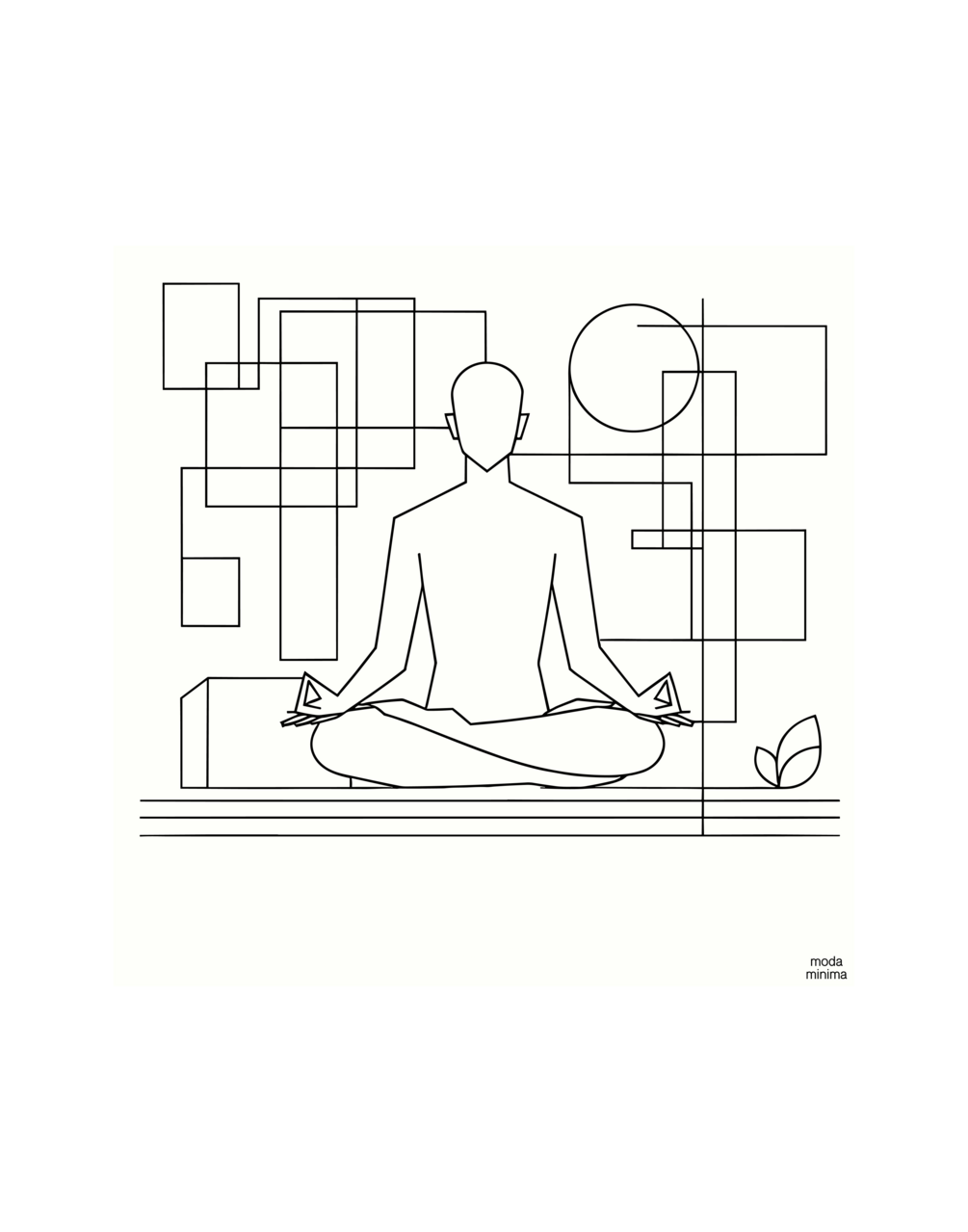
The paper around a figure has shapes of its own. In Still Sitting, the gaps between the body and the surrounding rectangles offer another place to begin looking.
The Getty Museum calls the space around the main objects negative space. That term gives us a way to describe a visible relationship. Your response to that space can remain personal.
Begin beside the figure
Still Sitting, MM49, shows a figure with crossed legs. Rectangles overlap behind the shoulders, and a circle appears beside the head. Three long horizontal lines sit below the legs.
The outlines divide pale areas without filling them with dark color. Some spaces sit inside rectangles. Others continue past the drawing toward the edge of the preview.
You can compare those spaces without deciding what the figure feels. A description such as “a tall gap beside the shoulder” points to something another viewer can find.
An original looking card
| Place to look | Visible detail in MM49 | Your observation |
|---|---|---|
| Beside the head | A circle and several rectangular outlines | Describe one open shape. |
| Behind the shoulders | Rectangles overlap at different heights | Follow one boundary. |
| Below the crossed legs | Three long horizontal lines | Compare the spaces between them. |
| Toward the paper edge | Pale area continues beyond the drawing | Notice where you look next. |
The middle column records an editorial observation of the actual preview. The final column leaves room for yours. The card gives no score and requires no interpretation of the artist's intention.
Compare another kind of space
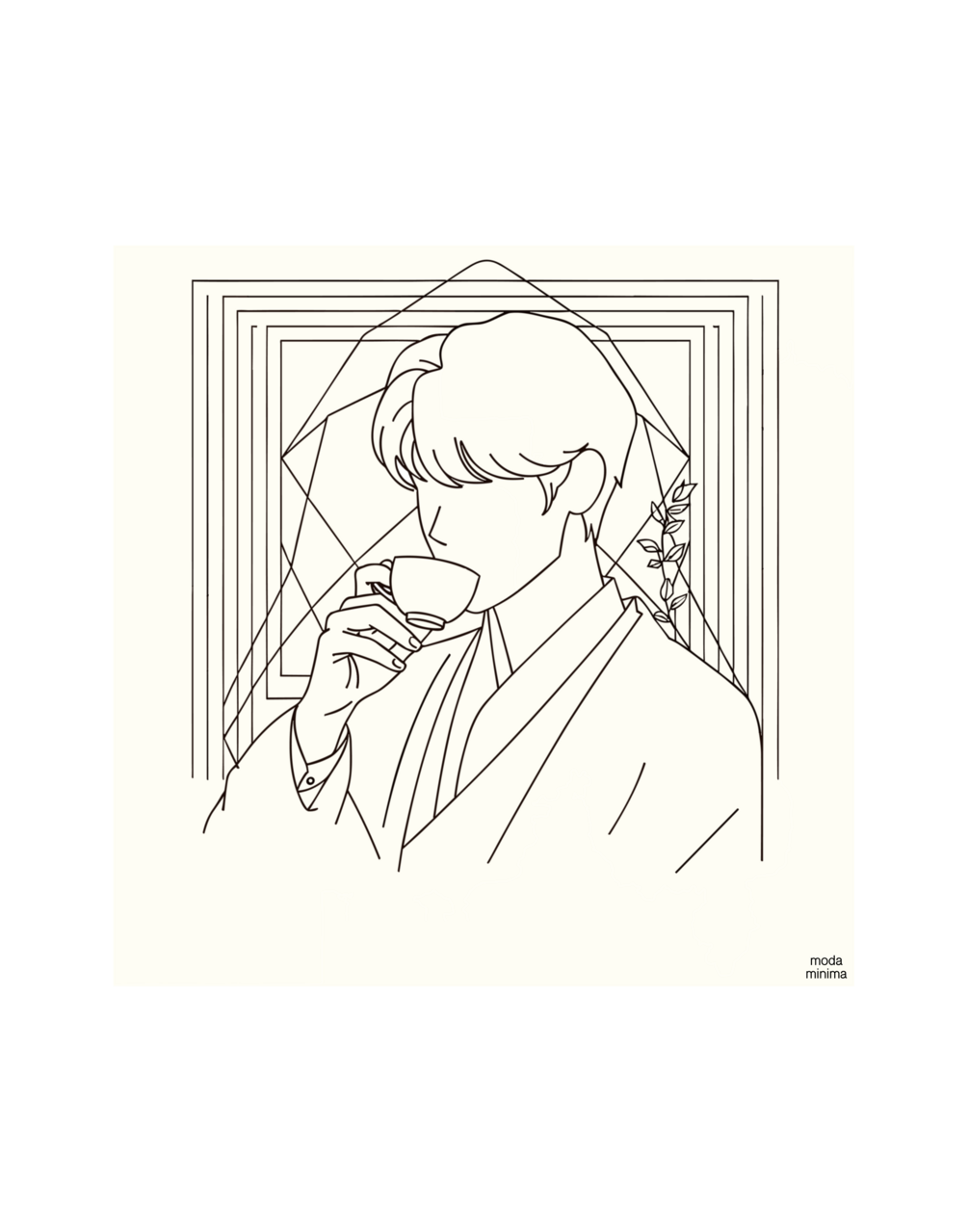
In Quiet Cup, MM6, nested rectangular outlines sit behind a person with a cup. The curved head and shoulders interrupt those straight boundaries. Open paper remains around the larger arrangement.
The two images give you different edges to follow. A rectangle has corners you can name. A gap beside a shoulder takes its shape from the figure.
- Choose one open area in Still Sitting.
- Describe its edges without naming a feeling.
- Find an open area in Quiet Cup.
- Compare the two descriptions.
The full clean previews are available in the collection. One open shape is enough for a second look.
Sources
- J. Paul Getty Museum: Elements of Art Reviewed 2026-10-23
- Moda Minima: Still Sitting, MM49, clean preview Reviewed 2026-10-23
- Moda Minima: Quiet Cup, MM6, clean preview Reviewed 2026-10-23