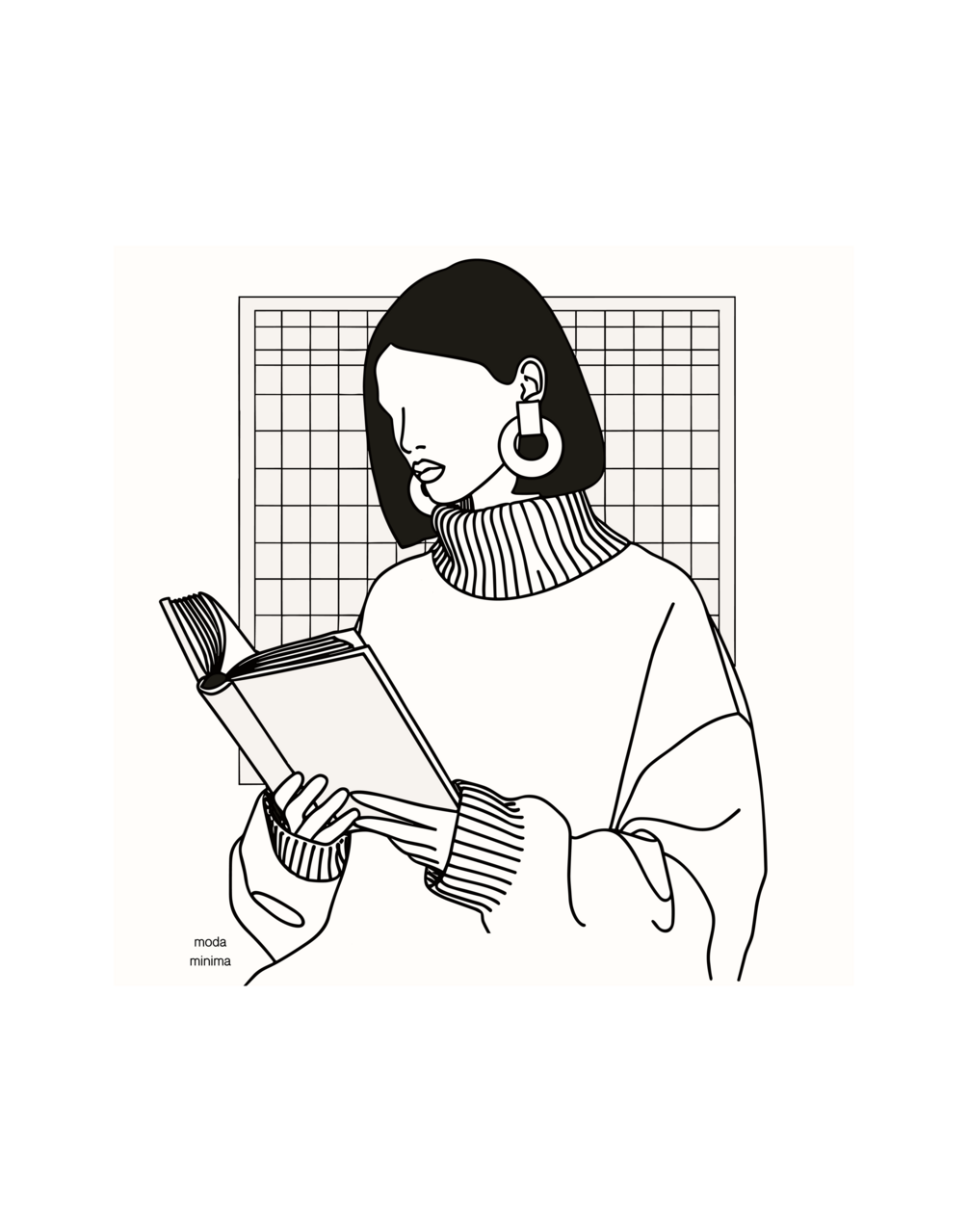
A reading picture can share a corner with a real book and chair. You can compare the pictured posture with the shapes already around you.
Chapter One, MM10, shows an open book across the figure's body. A fine grid sits behind the head. The bent arms give you more lines to compare with a chair back or shelf.
Try two relationships
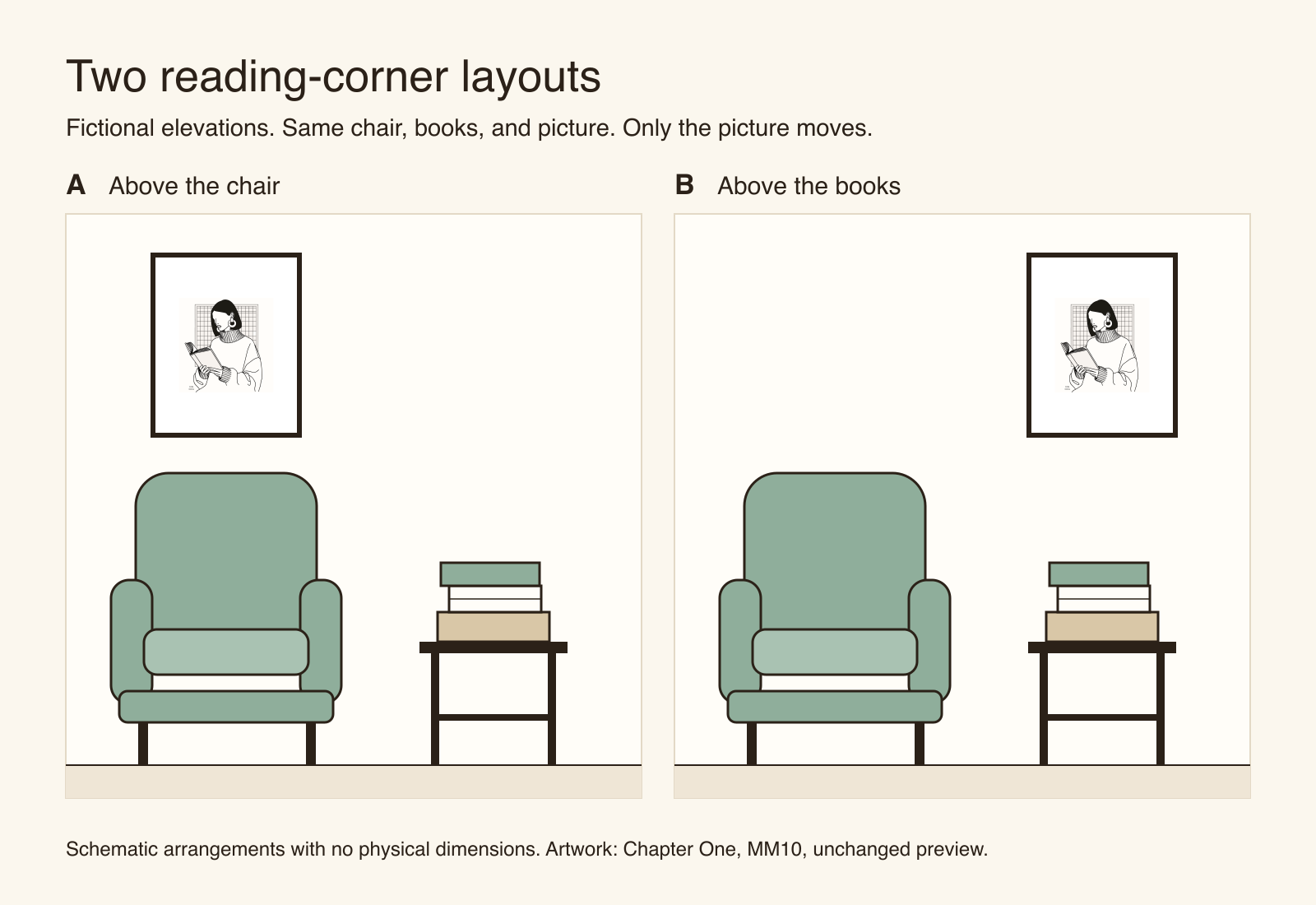
In the fictional elevations below, the chair and books stay in the same places. The same unchanged Chapter One preview appears at the same size. Only its horizontal position changes.
The Getty Museum uses emphasis to describe the part of a design that attracts attention. You can borrow that vocabulary for a room without treating either arrangement as a rule.
In A, the picture sits over the broad shape of the chair. In B, it sits over the narrower stack of books. Your first point of attention can differ from another reader's.
| Original comparison card | Arrangement A | Arrangement B |
|---|---|---|
| First thing you notice | Record one object or shape. | Record one object or shape. |
| A repeated line | Compare the picture and chair. | Compare the picture and books. |
| An open area | Describe the wall beside the frame. | Describe the wall beside the frame. |
| Your preference | Name one visible reason. | Name one visible reason. |
Keep the subject, change the picture
Story Time, MM44, offers another reading pose. A rounded head sits above an open book, with crossed legs below. Its heavier outlines differ from the fine grid in Chapter One.
The common subject gives you a connection to consider. The different outlines give you another choice. Neither picture requires a matching chair or a newly decorated room.
- Look at the objects already in your reading corner.
- Choose one line or shape to compare with a picture.
- Record where you notice the picture first.
- Name one arrangement you prefer.
The sketches compare visual relationships. An actual frame still needs real dimensions. The poster-size guide covers the sheet choices for that later decision.
Both reading pictures appear in the collection. A useful place to begin is the corner you already have.
Sources
- J. Paul Getty Museum: Principles of Design Reviewed 2026-10-23
- Moda Minima: Chapter One, MM10, clean preview Reviewed 2026-10-23
- Moda Minima: Story Time, MM44, clean preview Reviewed 2026-10-23